
Recap · PyTorch Conference 2026 · San Jose

30+ sessions. One open-source engine.

Engineers from Red Hat, IBM, NVIDIA, Mistral AI, AWS, Google, Meta and more took the stage in San Jose to show how vLLM is making AI faster and cheaper to run.

Speakers from

Red Hat
IBM
NVIDIA
Mistral AI
AWS
Google
Meta

Keynote

Keynote: Simon Mo

Simon Mo

·

Inferact

Main stage · Day 1

vLLM's co-creator on where open-source inference is heading, and how vLLM keeps making AI cheaper and faster to run.

See the keynote listing →Watch: Simon Mo interview on vLLM (AgentGlass) →

Three themes

What the community built this year

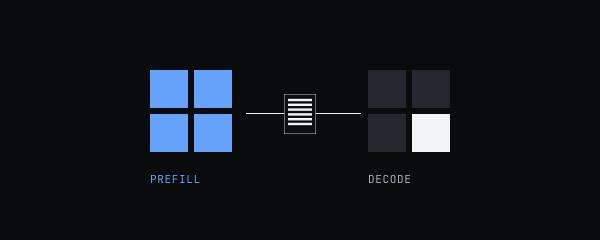
Four blue prefill GPUs pass a block of memory along a line to four decode GPUs.

01

Splitting the work

Reading a prompt and writing an answer need different things from a GPU. Teams showed how running them on separate machines, and passing memory between them, serves more people faster.

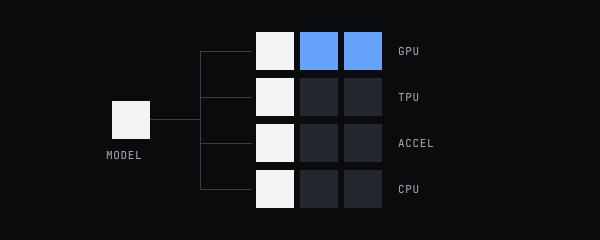
One model branching out to four kinds of chip: GPU, TPU, accelerator and CPU.

02

Any hardware

One vLLM model, many chips. Speakers showed the same model code running on GPUs, Google TPUs, AWS Trainium, IBM Spyre and Arm CPUs, with no custom versions for each.

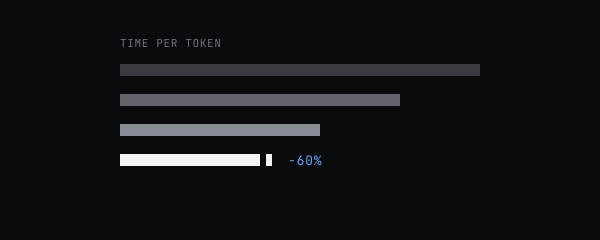
Time-per-token bars getting shorter, ending at 60 percent less.

03

Speed work

Faster kernels, quicker model loading and lighter maths. Small gains across the stack that add up to quicker answers at lower cost.

How it fits together

One request, split in two

01

A request comes in

A long prompt arrives.

02

Prefill reads it

Every token at once. Compute-heavy.

03

Notes are handed off

The KV cache moves to a separate set of GPUs.

04

Decode writes back

One token at a time. Memory-heavy.

With disaggregated serving, vLLM can split a request in two: one set of GPUs reads the prompt, then hands its notes (the KV cache) to another set that writes the answer.

Why it matters: the first word arrives fast, and the rest keeps a steady pace, even when traffic spikes.

Sessions

Talks from the vLLM community

Developers working together on laptops around a table

Community

Contributing to vLLM

Contributing to Inference OSS That Won't Stand Still: A BoF on vLLM, llm-d, and the Moving Target

Maroon Ayoub, Nili Guy

Red Hat, IBM

An open discussion on how to contribute to vLLM and llm-d while both projects keep changing quickly.

View session →
Code on a laptop screen

Speed work

Faster paged attention with Helion

Portable Paged Attention: From Triton to Helion

Burkhard Ringlein

IBM Research

Rewriting vLLM's core memory kernel, paged attention, in Helion so one version runs well across different hardware.

View session →
Close-up of a processor on a circuit board

Any hardware

vLLM on Google TPUs

PyTorch-Native LLM Serving on TPU: SGLang and vLLM

Colin Taylor, Qi Zhou, Angela Yi

Meta, Google, Meta

A PyTorch-native way to serve vLLM and SGLang on Google's TPU chips, so the same model code runs beyond GPUs.

View session →
Server racks with network cables in a data center

Splitting the work

Splitting prefill and decode

State-of-the-Art KV Transfer for Disaggregated LLM Serving in vLLM

Nicolò Lucchesi, Sunita Nadampalli, Zhanqiu Hu

Mistral AI, Amazon, Red Hat

How vLLM moves its working memory (the KV cache) between separate reading and writing machines. The speakers report a faster first token, and that splitting the work beat running both on one machine.

View session →

Get involved

Built by 2,000+ contributors. Room for one more.

Join the community on GitHub and Slack, ship your first pull request, or just come say hi.